Why ADHD and trauma look so similar.
At a surface level, they can look almost identical!
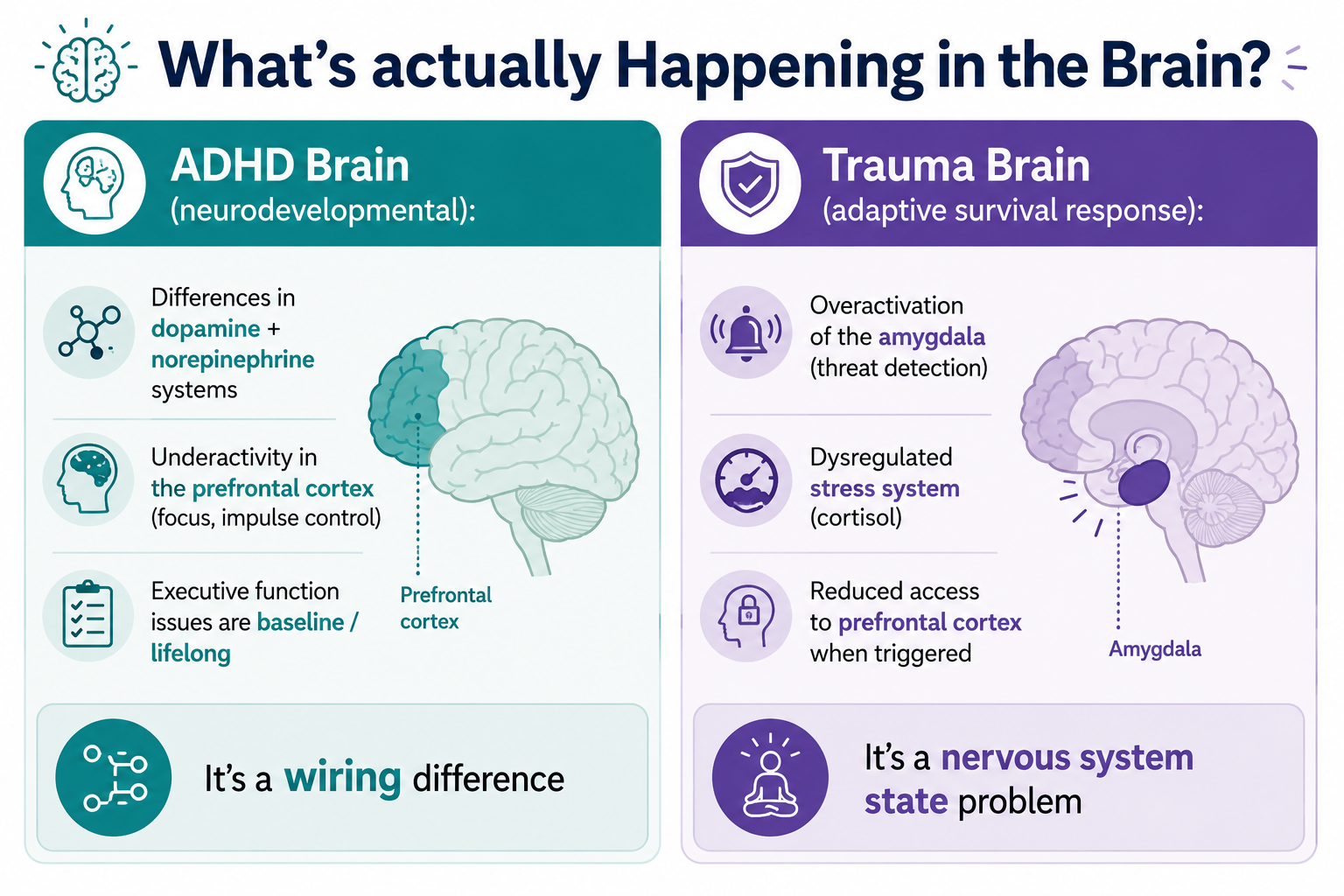
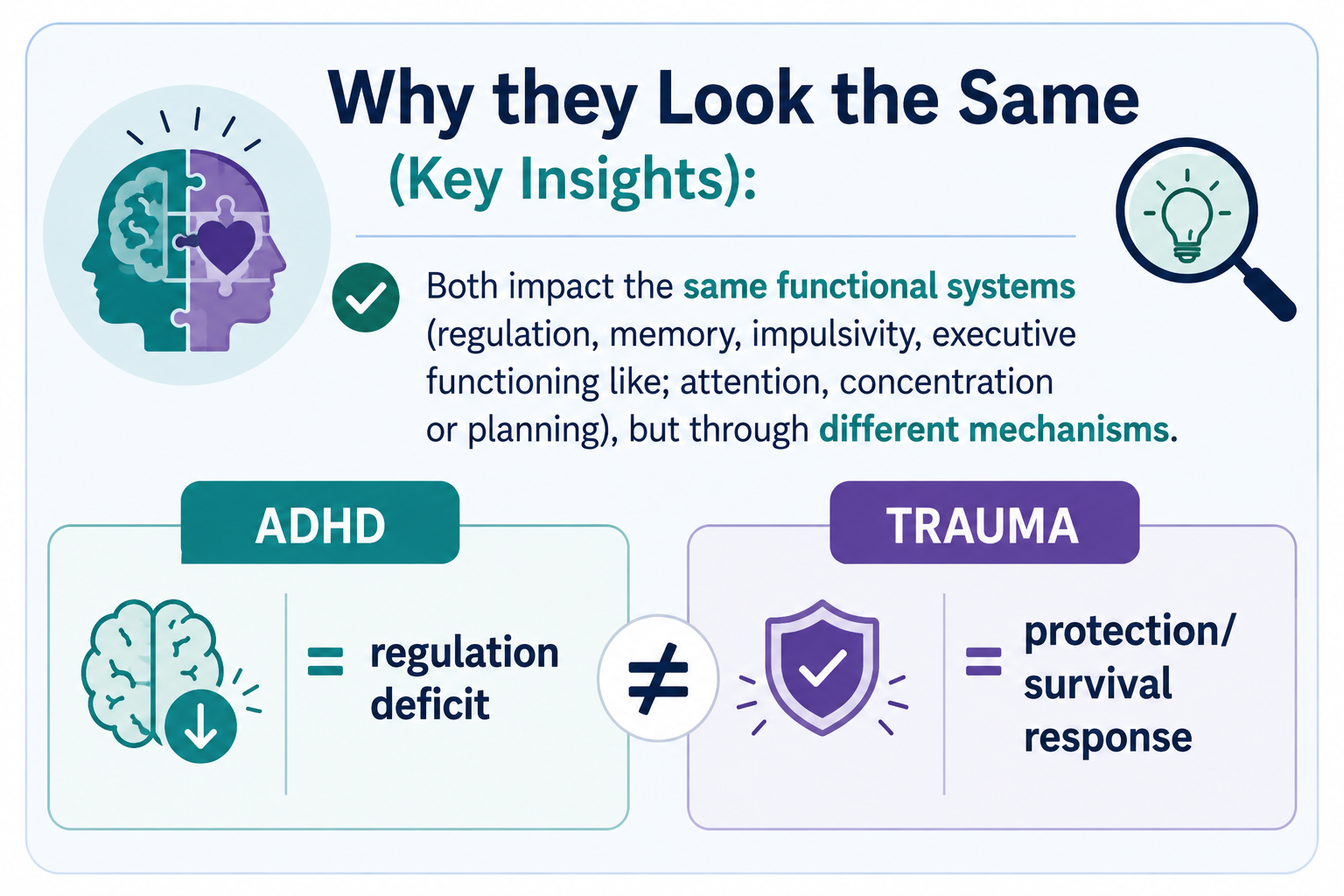
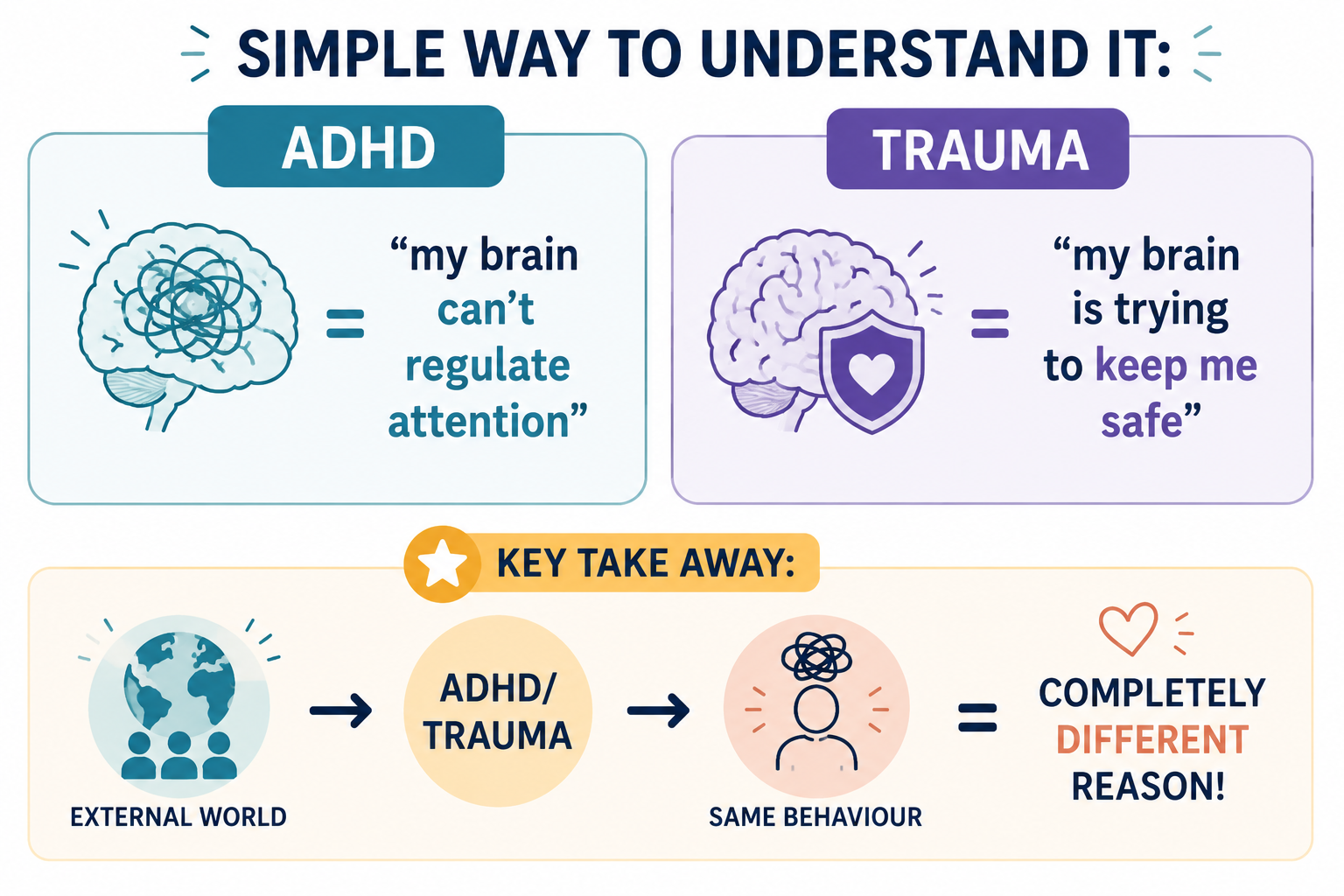
ADHD and trauma can look almost identical on the outside (the external world).
Research shows both share symptoms like inattention, impulsivity, irritability, and disorganisation
So when you say…
‘I can’t focus’
‘I procrastinate’
‘I feel all over the place’
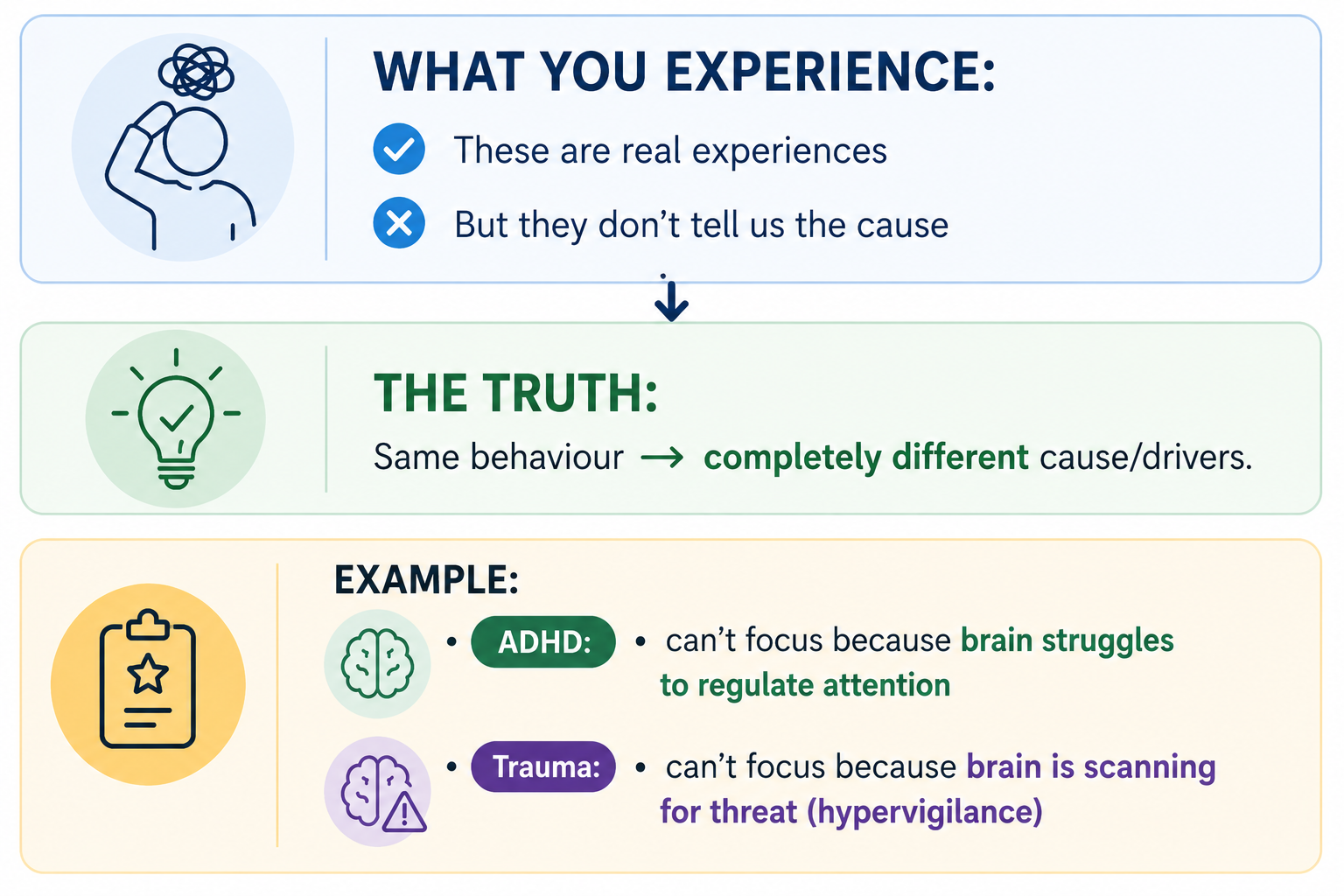
That doesn’t automatically tell us what’s actually going on because two different systems can create the exact same experience.
Think of your brain like an upside-down triangle
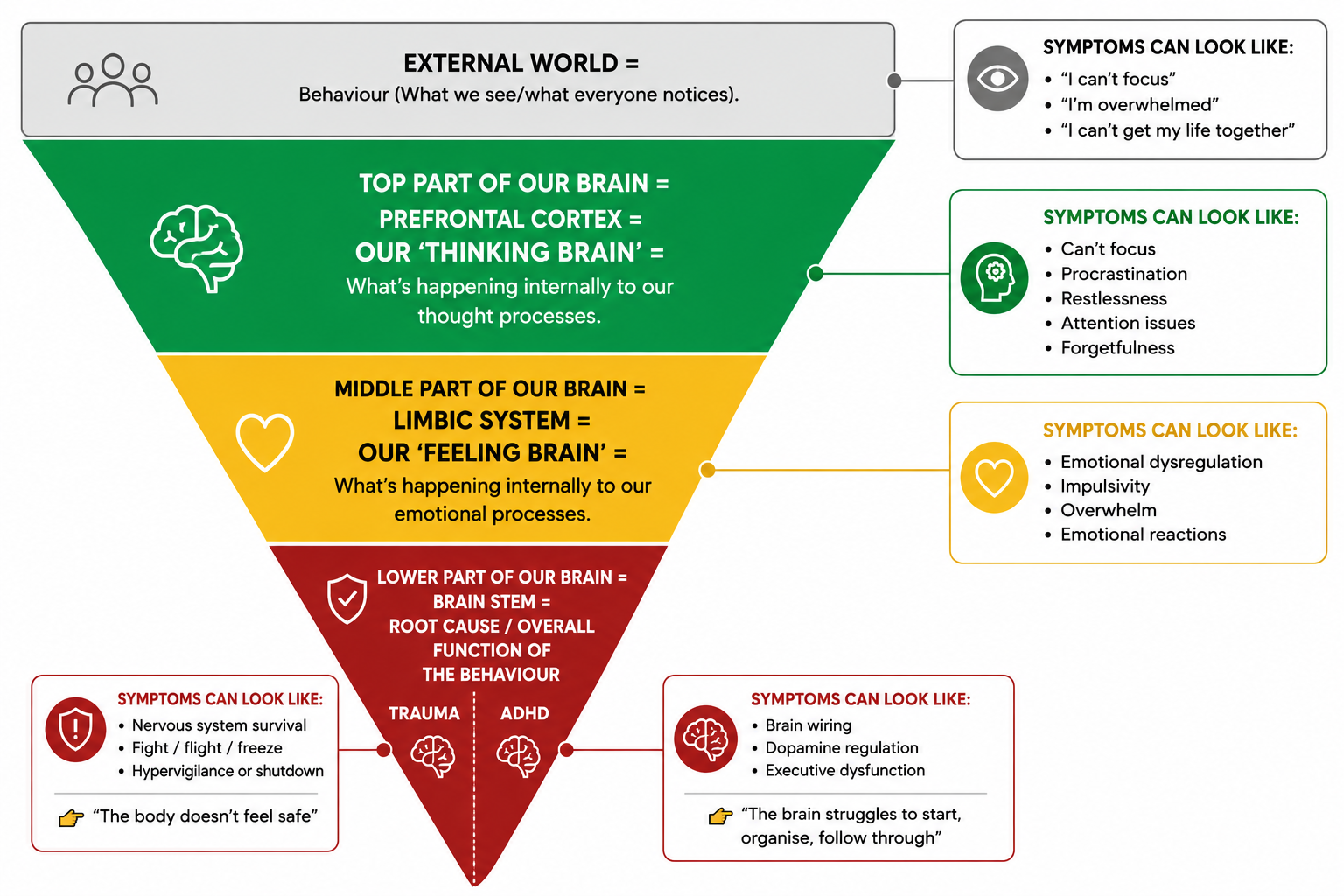
On one side, there’s trauma:
Function = the nervous system.
“I can usually focus, but in this particular moment, focus isn’t possible because I don’t feel safe;
something feels familiar, in an uneasy way; it hurts (emotionally), to focus”.
On the other side, there’s ADHD:
- Function = how the brain is wired.
- “I can’t start; the engine doesn’t start easily; the tabs are open, and it’s hard to organise or follow
through”.
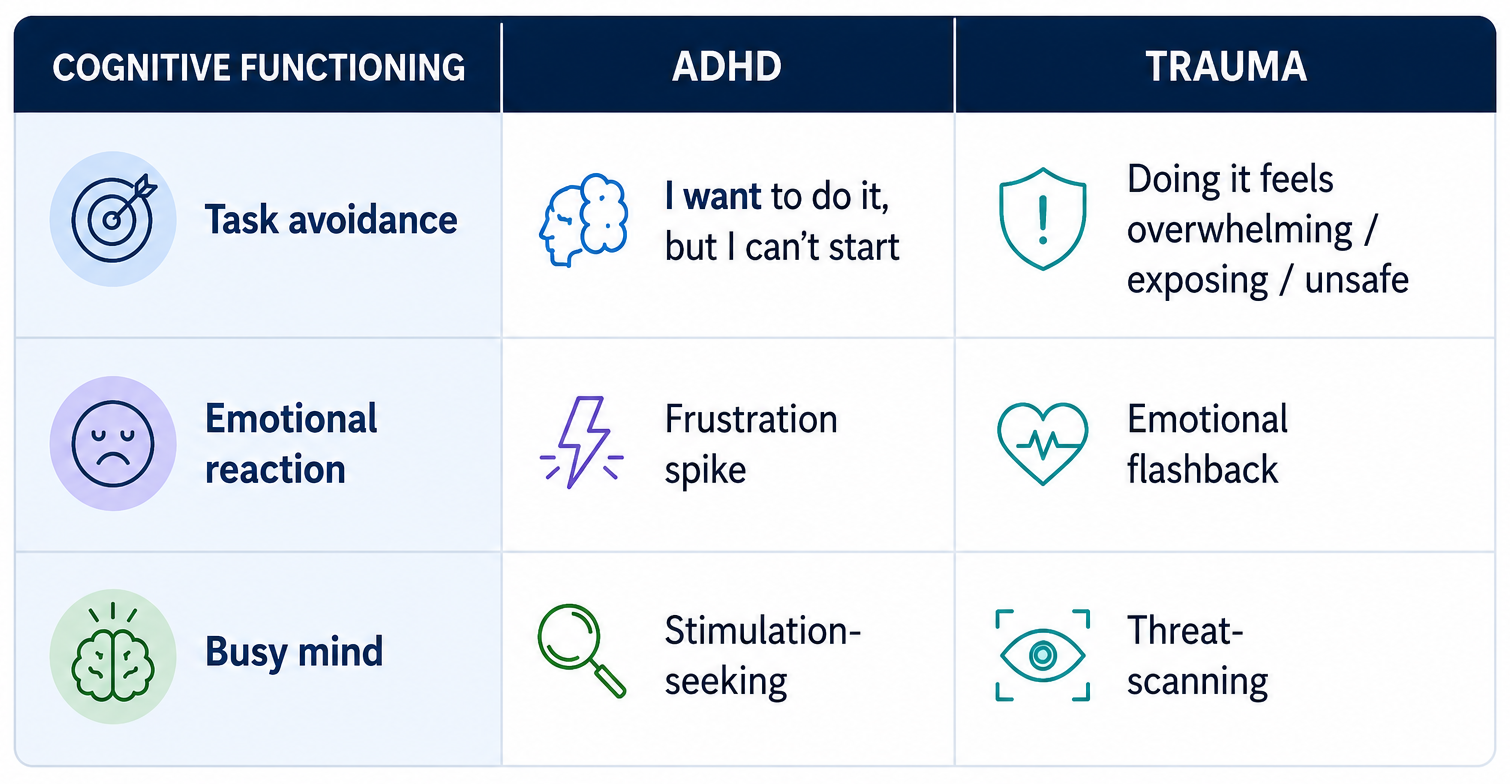
The Challenge
For a lot of people, it’s actually both! And this is where it gets really important! Because if we treat symptoms rather than the function of the behaviour, for example, ‘try harder’, ‘be more disciplined’, ‘just focus’.
We miss what’s actually driving the behaviour, and we miss implementing effective therapeutic and/or pharmacological supports to create effective change.
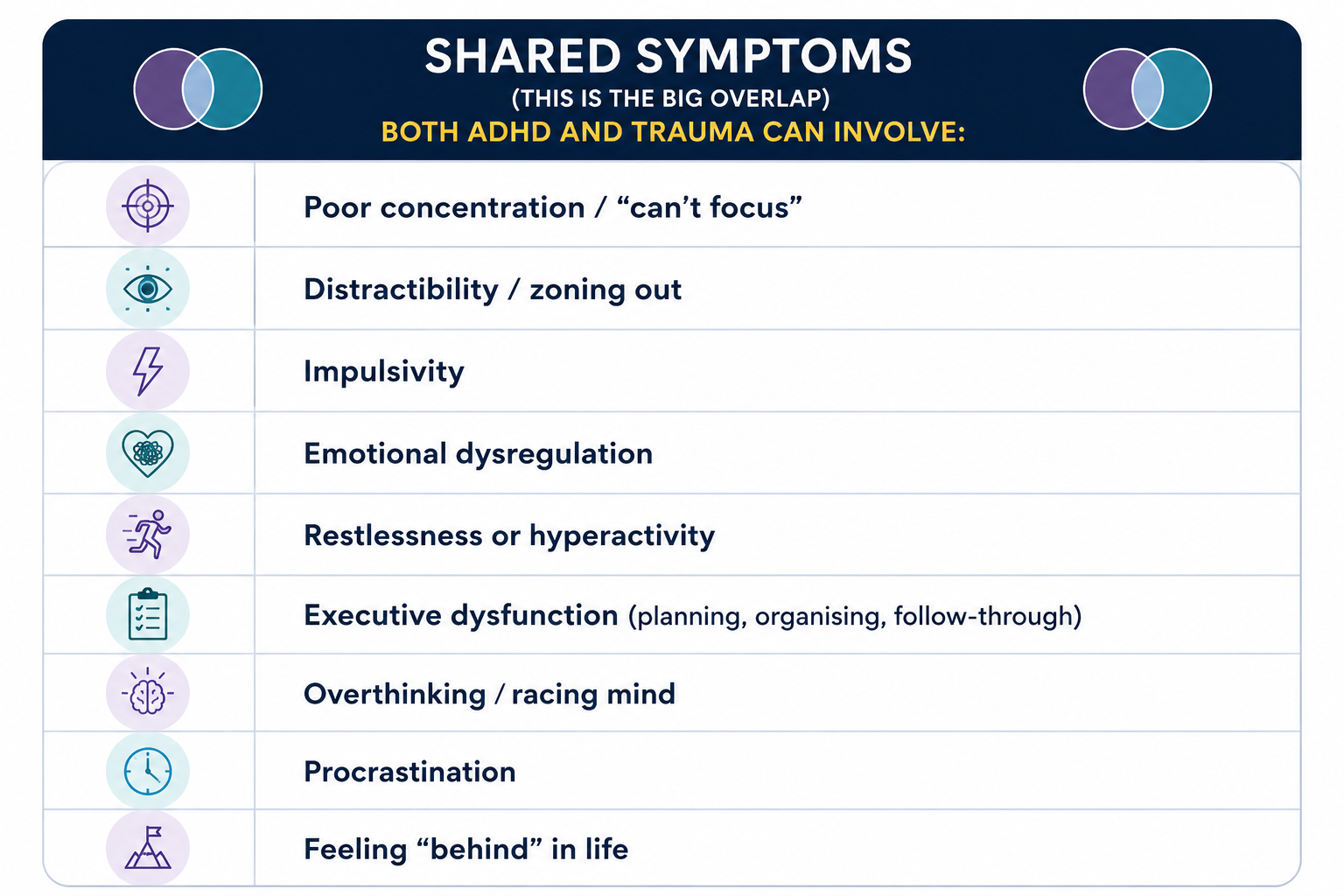
This overlap is well documented. Trauma can literally mimic ADHD symptoms.
Why misdiagnosis happens so often
1. Symptom-Based Diagnosis
Diagnosis is based on behaviour, not brain scans. So:
• “Can’t focus”
• “Impulsive”
• “Disorganised”
→ could be either (or both)
2. Trauma isn’t Always Obvious
Especially:
• Childhood emotional neglect
• Chronic stress
• Attachment trauma
These often don’t get identified as trauma, so ADHD becomes the label.
3. Timing gets Blurred
• ADHD starts in childhood
• Trauma often also happens in childhood
So clinicians ask: “Was this always there?”
4. They Frequently Co-exist
Research suggests people with ADHD are more likely to experience trauma. So, it’s not either/or—it’s often both layered.
Why ADHD meds don’t “work” for trauma
The really, really, Important Part!
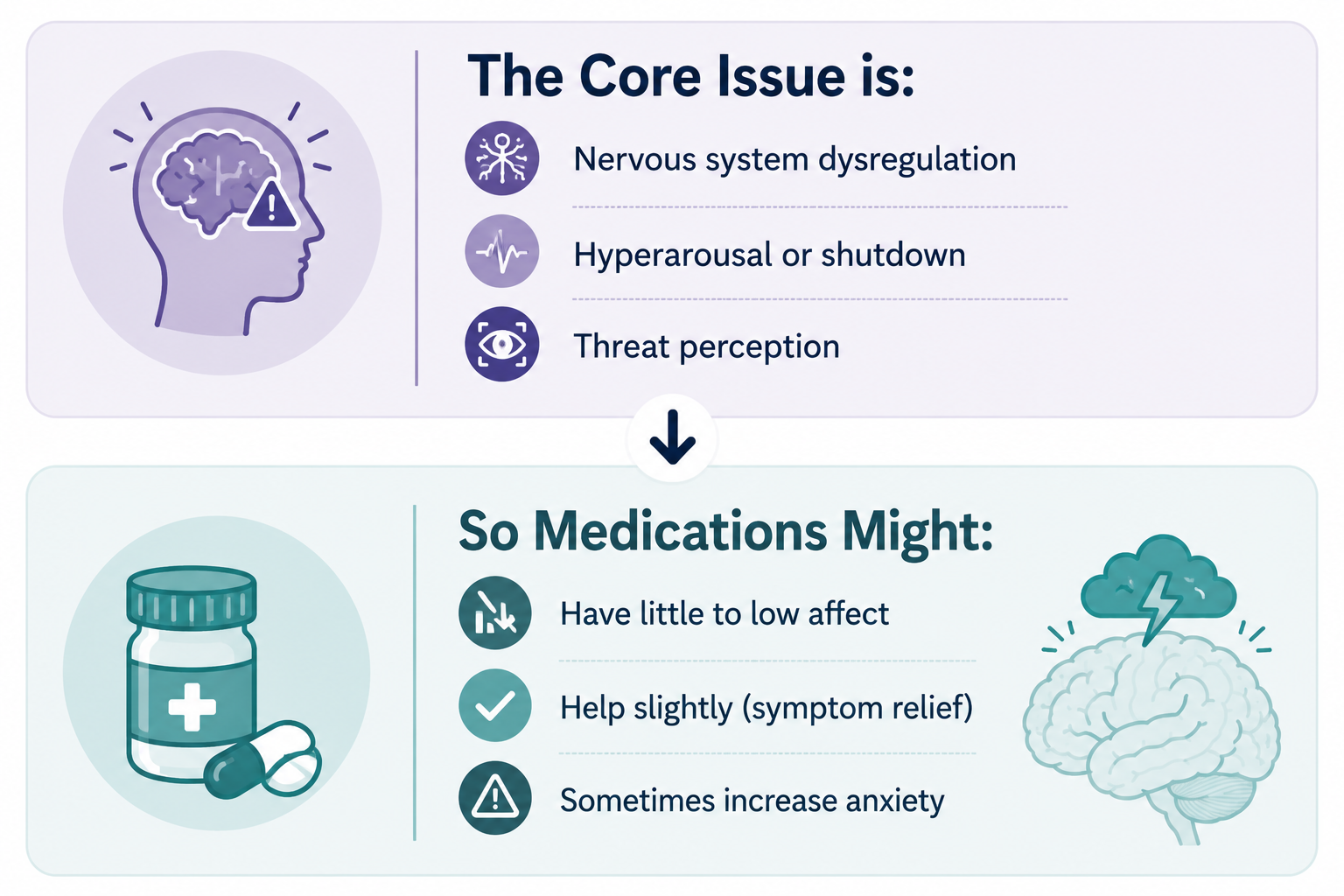
ADHD medication (e.g. in most cases = stimulants):
Increases dopamine + norepinephrine
Improves:
Focus
Motivation
Impulse control
Works well when the issue is neurochemical regulation
But Trauma is Different:
The Bottom Line?
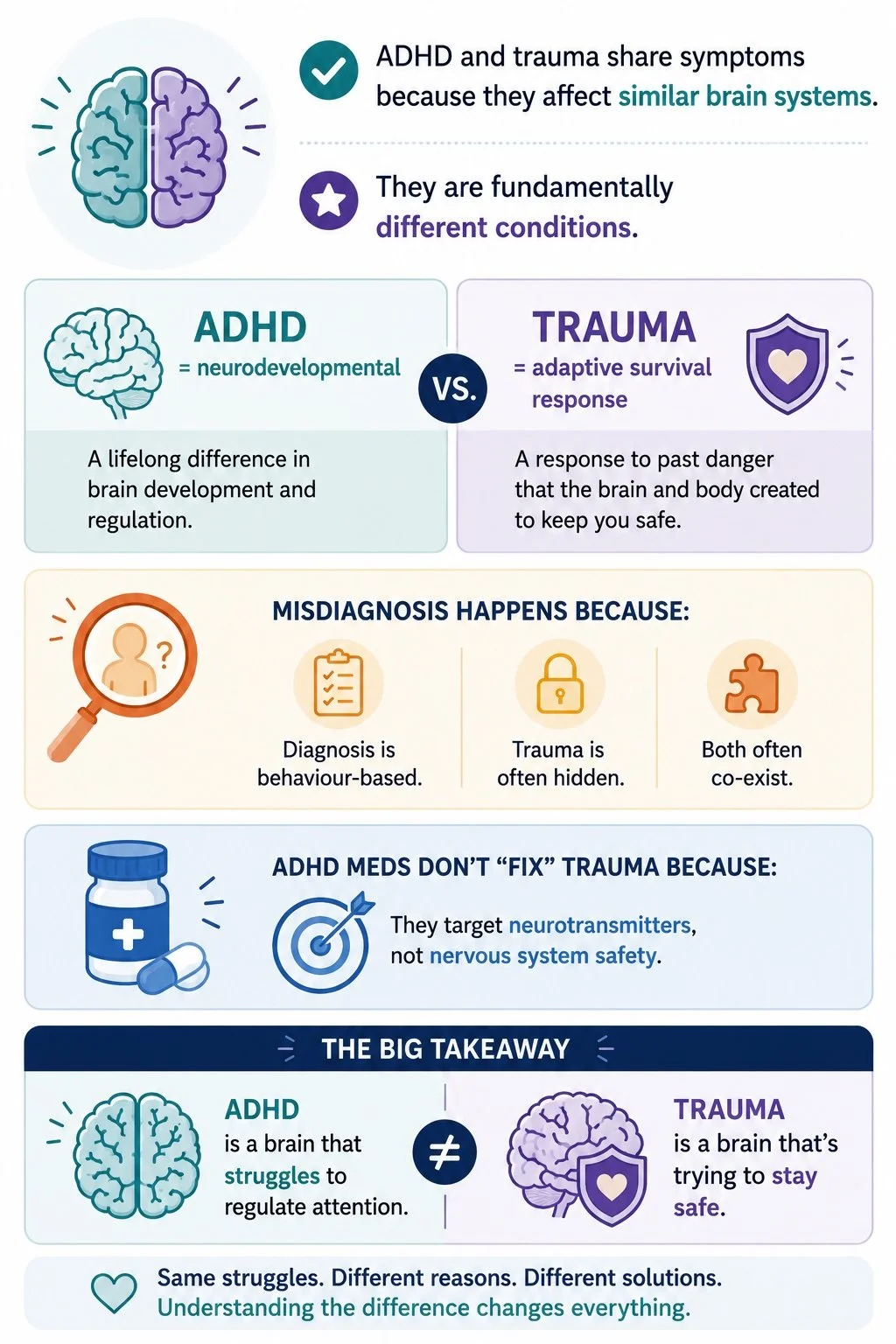
Medication helps the first.
It doesn’t resolve the second.
What’s underneath this for YOU?”
Ask: “WHY is this behaviour happening?”
• ADHD → can’t initiate/sustain attention
• Trauma → avoiding, scanning, or overwhelmed by threat
At Mending Minds? We’re not ‘fixing’ behaviour/symptoms.
We are identifying the driver/function of the behaviour to ensure effective, lifelong treatment.
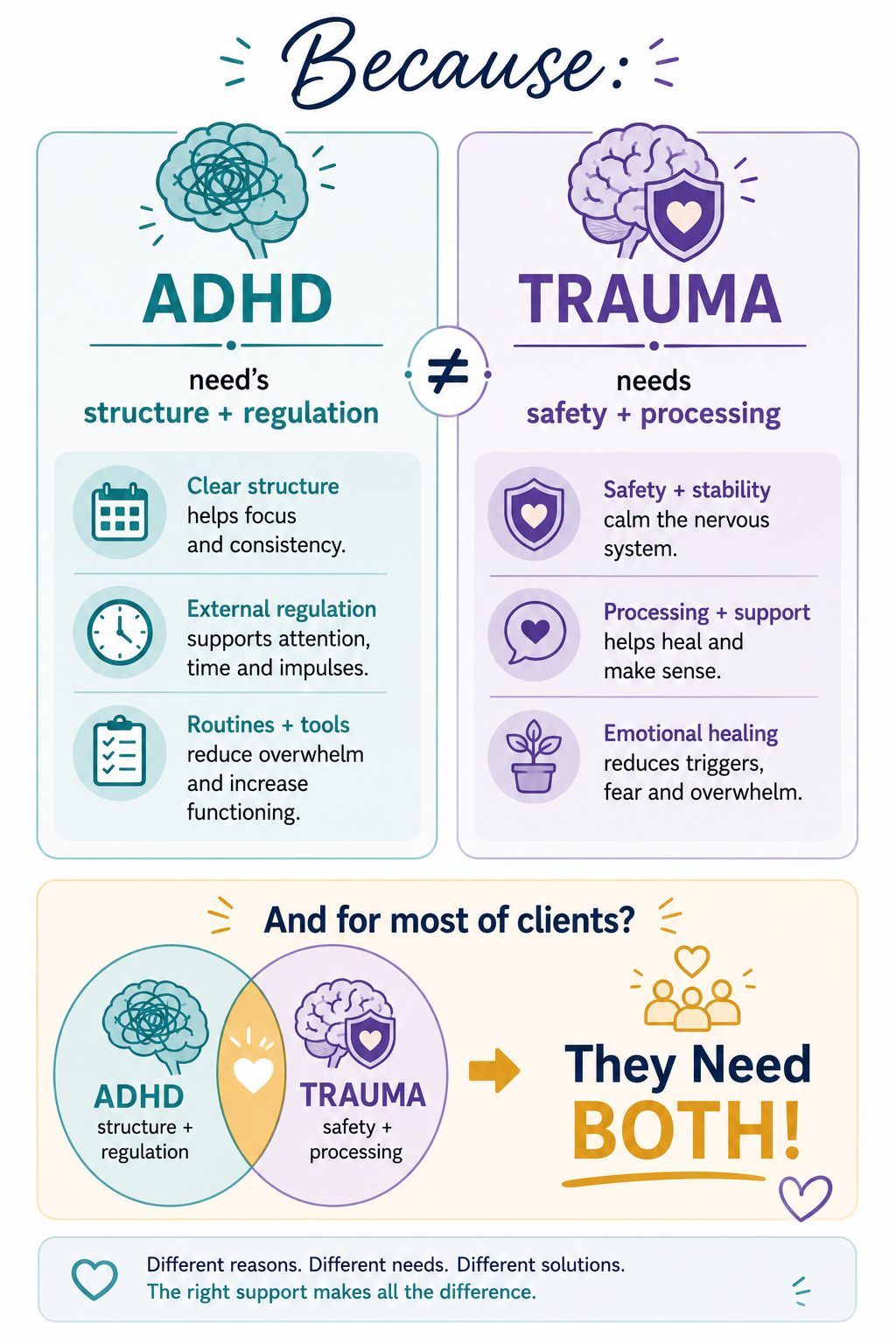
What does this all mean?
You’re not broken. Your system is either overwhelmed or protecting you!
Not reinvented. Just mending the bits together.
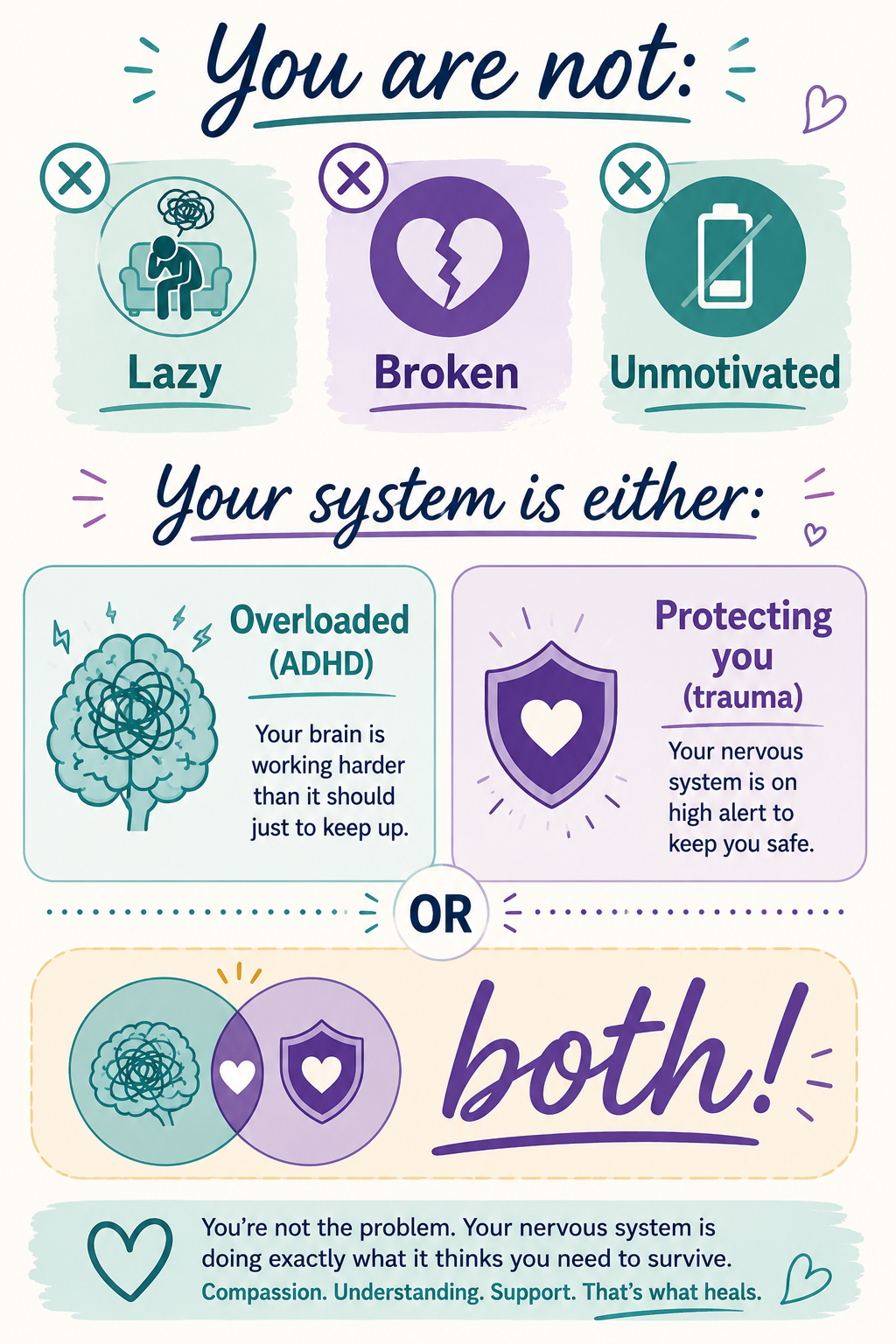
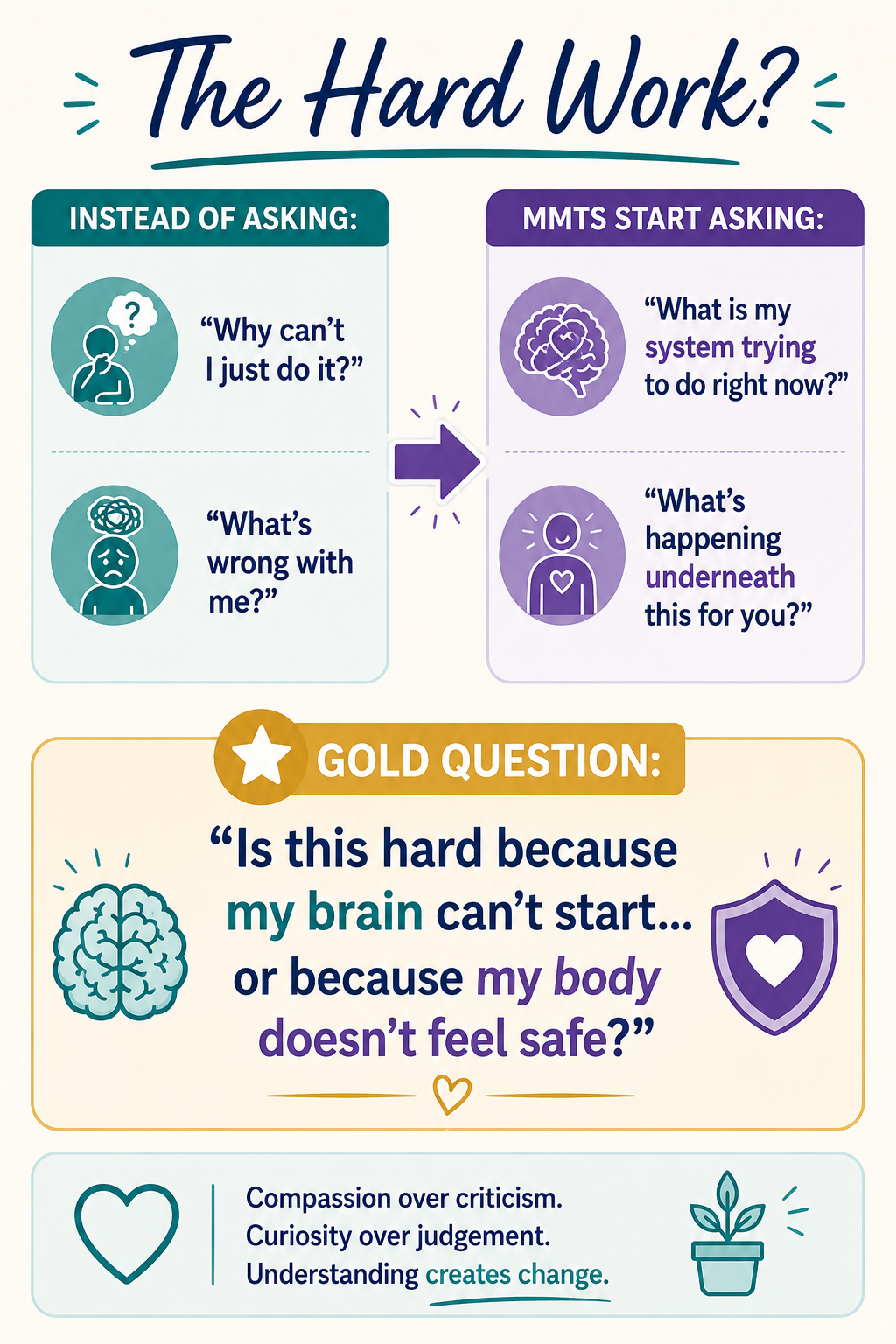
You’re not the problem. Your system is trying to cope.